Faculty of Law Focus Group Discussion Examines the 2026 National Penal Code: Law Enforcement, Narcotics Abuse and Asset Confiscation
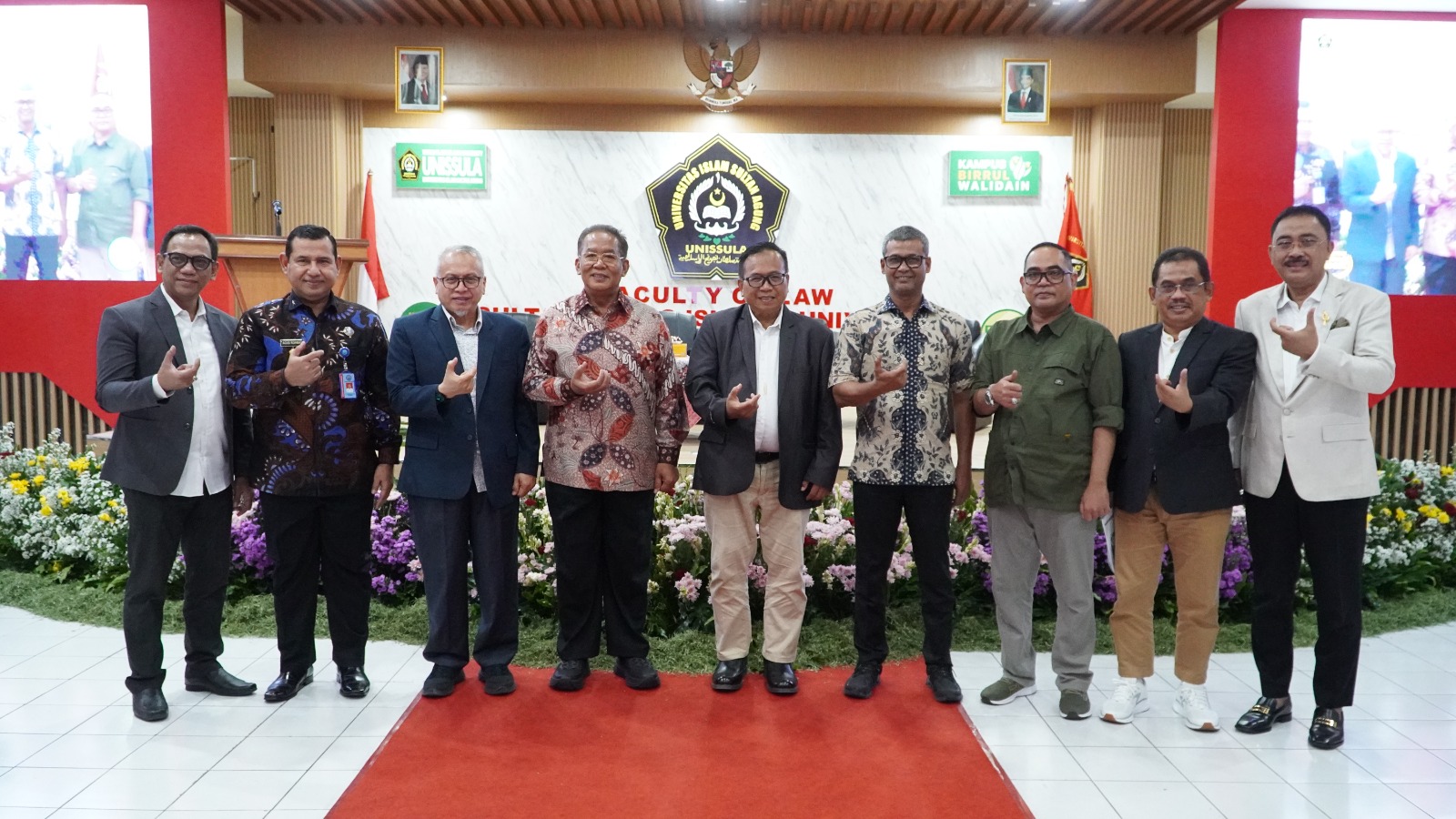
The Dean of the Faculty of Law at Unissula, Prof Dr Jawade Hafidz SH MH, said the Focus Group Discussion (FGD) held by the faculty examines in greater depth, and follows up on, current developments concerning the 2026 National Penal Code in relation to law enforcement, narcotics abuse and the confiscation of offenders' assets. The 2026 National Penal Code is due to take effect in January 2026.
The discussion was held on Friday (28/11/2025) at the Faculty of Law with a number of speakers: the former Head of the National Narcotics Agency, Commissioner General (ret.) Dr H Anang Iskandar; the Head of the Central Java Provincial Narcotics Agency, Brigadier General Dr Agus Rohmat; the Assistant for Asset Recovery at the Central Java High Prosecutor's Office, Muklis SH MH; and academic Dr Muhammad Taufiq SH MH of the Faculty of Law, with Dr Djunaedi SH SpN as moderator.
According to Prof Jawade, this discussion shows that matters relating to the 2026 National Penal Code — law enforcement, narcotics abuse and the confiscation of offenders' assets — need deeper study.
"For narcotics users, or rather those who misuse narcotics, their future should be saved through rehabilitation rather than through custodial punishment. What remains is to formulate the rehabilitation mechanism and to determine who holds that authority," he explained.
As for offenders in corruption cases that harm the state, the manner of handling them — particularly the recovery of state assets — requires thorough study: whether confiscation should be carried out swiftly, or only after a court decision with final and binding force against the offender.
In his view, each approach has its strengths and weaknesses. Confiscating assets sooner is faster, but is not yet backed by a final and binding court decision. Waiting for a court decision, on the other hand, takes a long time and thus hampers the recovery of state assets from perpetrators of corruption, causing ever greater loss to the state and to victims. "That is why in-depth study is needed," he explained.
The assets that may be confiscated are goods used in and/or obtained from the offence, and goods used in an attempt to obstruct the law enforcement process — inquiry, investigation, prosecution and court proceedings.
Opening the event, the Rector of Unissula, Prof Dr Gunarto SH MH, said that through such discussions academics can contribute ideas and draw out deeper insight and perspectives — in this case on narcotics and asset confiscation — and so provide input for government policy. Also present were the Chair of the Sultan Agung Waqf Board Foundation (YBWSA), Prof Dr Bambang Tri Bawono, along with a number of participants.